Blog Of The Year Award

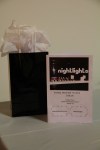
Well, here we are in the 2nd week of 2013 and this is my first post of the year! The end of 2012 was very busy with performances that left no time for blogging. In all the busyness, though, I was pleasantly surprised by Laura Lamere with the 2012 Blog of the Year Award! She writes a wonderful blog about parenting creative kids. I am so inspired by the way she actively supports her children in their artistic endeavors and enlightens the rest of us on how to do the same with our own children. Since she is one of my favorite bloggers, I am humbled that she would present me with this award. Thanks, Laura for your support of Kids and Keys.

This particular award was established by The Thought Palette whose tag line is “Things to challenge and inspire you”. Now, how intriguing is that?

Of course there are some rules for accepting the award:

1 Select the blog(s) you think deserve the ‘Blog of the Year 2012’ Award

2 Write a blog post and tell us about the blog(s) you have chosen – there’s no minimum or maximum number of blogs required – and ‘present’ them with their award.

3 Please include a link back to this page ‘Blog of the Year 2012’ Award – http://thethoughtpalette.co.uk/our-awards/blog-of-the-year-2012-award/   and include these ‘rules’ in your post (please don’t alter the rules or the badges!)

4 Let the blog(s) you have chosen know that you have given them this award and share the ‘rules’ with them

5 You can now also join our Facebook group – click ‘like’ on this page ‘Blog of the Year 2012’ Award Facebook group and then you can share your blog with an even wider audience

6 As a winner of the award – please add a link back to the blog that presented you with the award and then proudly display the award on your blog and sidebar … and start collecting stars… (read more about collecting stars here.)

So, here are the blogs I would like to present this award to…

Laura Lamere’s blog would have to be the first one. As I stated earlier I am inspired by the purpose of her blog which is to share with parents of creative kids ways to support them in their creativity. As both a parent and an artist that whole concept makes me happy!

LaDona’s Music Studio gets my vote for 2012 Blog of the Year because it is definitely one that I try to visit everyday. LaDona writes helpful and thoughtful posts about teaching piano and she has a great sense of humor.

Color In My Piano by Joy Morin is a blog for piano teachers with a WEALTH of tips, printables, and great ideas. Joy’s blog is definitely one to visit often if you are working with kids and piano.

Don’t Shoot The Pianist  is one of my new favorite blogs. It is a collection of music related cartoons that make you laugh, think, then laugh again!

Foxx Piano Studio Resources by Jennifer Foxx By now you can tell that I’m addicted to piano blogs! This one is where I find out about a lot of technology to use in teaching music. Jennifer has a weekly series called Tech Tuesdays which appears on her blog in addition to all the wonderful ideas she shares from her piano teaching studio.

And those are my picks for 2012 Blog of The Year. Congratulations to these bloggers and thanks for the time they each put into sharing their ideas!

If you’d like to find out more about the 2012 Blog Of The Year Award, click here.


2012 Piano Concert

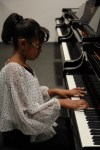
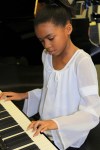
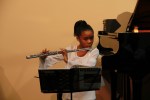
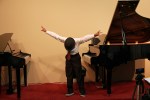
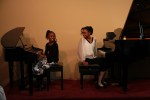
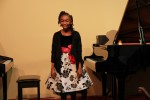
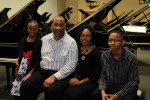
Group2As we say goodbye to 2012, I thought I’d share a few pictures from one of December concerts. Thank you for visiting this blog! Stay tuned for more in 2013!

2012 In Review and Many Thanks!

The WordPress.com stats helper monkeys prepared a 2012 annual report for this blog.

Here’s an excerpt:

4,329 films were submitted to the 2012 Cannes Film Festival. This blog had 16,000 views in 2012. If each view were a film, this blog would power 4 Film Festivals

Click here to see the complete report.

Student Awards

I recently received an email from a music teacher friend asking for suggestions for student awards so I thought I’d share my response here in case anyone else is in need of these ideas.

In my studio I try to identify at least one unique gift that each student brings to their piano studies and make a big deal about it at our annual concert. There is nothing better than seeing how this small gesture boosts my students’ confidence and encourages their parents. While the students bask in their newly discovered area of expertise they also take notice of what other students received recognition for. I am sometimes amazed at how months after the event a student will ask if they now qualify to receive an award that was given to someone else. Who knew that they were secretly striving to attain that expertise status?

So, here are some awards I have used in the past:

Best Ears (for the student who can easily pick out songs by ear)

Best Rhythm

Fastest Fingers (for the student who is notorious for playing too fast! I conveniently leave this description out)

Practice Master (always exhibits good practice habits)

Musicianship (I use this for the student who may struggle with music learning but never gives up and maintains a good attitude)

Best New Artist (for new students)

Songwriter of the Year

Learning the Most Songs

Sight Reader of the Year

Funk Master, Pop Master, Gospel Master, Jazz Master, Blues Master, Classical Master (for the student who excels in a particular genre)

The list can go on indefinitely. The point is to carefully look for the treasure that each student holds and tell everybody about it! Not every student will be a great piano player, but every student is the best at something as it relates to their musical training. It’s up to us as teachers to find it and build on it!

By the way, I don’t give out a certificate for these awards. LaDona of LaDona’s Music Studio has written an excellent post that mentions this point. Check it out here. A small gift from the dollar store usually works well.

Do you have any great awards you give out to piano students? Share them in a comment below!

Free Printable: Personalized Piano Concert Invitations

Personalized Music Invite

Since performance season is here, I am posting a new printable today that you can email to parents who want to invite school teachers and friends to your student’s piano performance.  Family and friends are regulars at piano recitals and concerts, but expanding your audience by inviting members of the community is a great way to showcase your students to more people and to get the word out about your studio and what you have to offer as a music teacher. Get the FREE Printable by clicking here or on the above graphic.

Even if you already have printed postcards and flyers this can still be a great way to invite people who may not normally attend your show. It can also serve as an extra invite once your run out of your printed materials. Simply replace my content with the details for your event. Email to the parents in your studio and have them type in their child’s school name and their child’s name in the appropriate spaces on the printable word document. Now they have personalized invitations for their child!

Parents can choose to simply email the invitation or print copies and deliver to school friends, teachers, and administrators. Be sure to tell parents to invite their child’s school music teacher!

For more about how to put on a great piano event click here.

Did you enjoy this post? Please share it using one of the sharing buttons below!

Teaching Song Patterns With Jenga Blocks

Song Patterns With Jenga Blocks

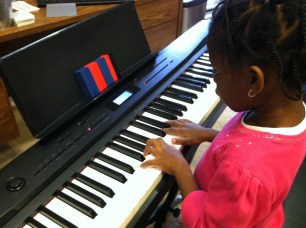
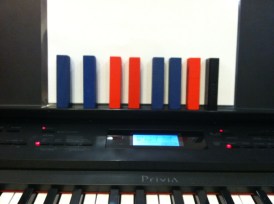
When it comes to learning songs, sometimes words can help and sometimes words just hurt. Kids don’t always easily hear repeated musical patterns when the words change and that’s when words begin to slow down the learning process. Yesterday one of my students was struggling with a mental block while playing “Tucker’s Secret Life” from My First Piano Adventures Book B by Faber. She enjoys singing this fun song and knows how to read the music, but she just kept forgetting where the song was headed. Frustration began to set in. We sang through the song without using the words. I tried to point out the places where we hear the same sounds. We drew shape symbols for the different sections on her music. Nothing seemed to work until…I remembered the can of colorful Jenga blocks! (Actually they are called Rainbow Jumbling Towers – the game is played just like Jenga)

Jenga pattern

The song basically only has 2 parts and an ending that is a variation of one of these. So, I assigned a color to each section then laid the blocks out to reflect the sound pattern. Now my student was able to see that the she should play the first pattern 2 times, then the 2nd pattern 2 times, back to the first pattern 2 times, the second pattern 1 time and end with the variation. Suddenly she was able to play the whole song from memory with no problem! After playing through a few times, I removed the blocks to see if she could still play the song. She and I both were so proud when she was able to play the song without using her book or the blocks.

Moments like this make me know that I will never let go of my music toys!

Non-Traditional Performance Opportunities

One of my goals in teaching piano is to help my students integrate music making with everyday life. When students realize that they can play their instrument for more than just an annual recital or formal concert, lessons become more meaningful. More meaningful lessons means more dedicated students!

As music educators we realize that music is everywhere. Our students, however, may not be consciously aware of this fact. It is up to us to help them notice music that is in their everyday lives. One way we can do this is to seek out non-traditional performance opportunities for our students. One of the best ways to do this is to consider the other activities in which the students participate. For instance, I have several piano students who are also studying dance. Dance classes are perfect performance opportunities for piano players! Who says dancers have to use pre-recorded music?

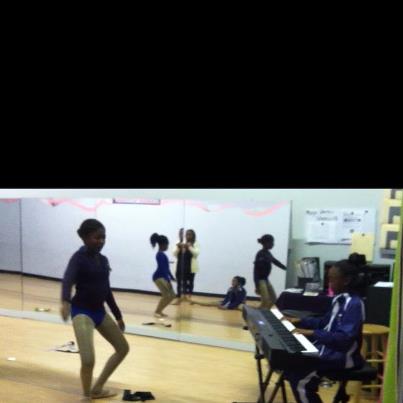
The picture above shows one of my students (in this instance, my daughter) accompanying at a dance class. This was a great opportunity to gain experience working with other kids in the arts. The fact that the dancers were friends of hers was also very encouraging and it made it seem more like “play” than performance or practice. (Isn’t that what music making should be?)

From a piano pedagogy standpoint, the piano student who accompanies dance classes can gain a deeper understanding of rhythm and the need to keep a steady beat. Watching and being aware of the dancers’ movements also helps the student feel the pulse of the music. What about helping with expression? Yes, of course! Having someone dance to the music as a student plays can help the student play more expressively and improves phrasing. These things are possible because suddenly the music has a purpose beyond the physical acts involved in playing the instrument.

An added bonus for this non-traditional performance opportunity is the student’s interaction with the dance instructor. In this type of situation the student must be able to receive direction from a teacher other than the piano teacher. This is so important for helping the student broaden his or her idea of what it means to take piano lessons. Sometimes students place their lessons in a box where they only use their skills for their piano teacher. Playing for a teacher in a different area of the arts forces the student to become the expert concerning the music they are playing. They must use the knowledge that they have about their instrument and apply to what the dance teacher is asking them to do. This translates into higher levels of confidence which of course makes better performances possible.

Finally, an added benefit of this non-traditional performance opportunity was that some of the dancers became interested in playing the piano!

If you teach music or have a child who takes dance classes, I would highly recommend you speak with a dance teacher in your area about the possibility of your students accompanying for the dance class. Accompanying for the warm up section of the dance class can be a great way to start.

What are some other non-traditional performance opportunities that you offer your students?

What If I Make A Mistake?

Mistakes Are GuaranteedWith concerts, recitals, and holiday performances just around the corner both students and teachers are starting to feel a case of the butterflies. I know I am! Teachers wonder if they will have all the students prepared in time. We wonder if the programs will get printed in time, if the sound system at the venue will be working properly, if there will be enough food for the reception. Students wonder if they will mess up on stage. They worry that they might trip on the way to or from the piano bench. They are tortured by a multitude of what ifs – one of the worst ones being what if I forget my song?

It’s been said that there are no guarantees in life, but actually there is one! As I was re-reading the Sept/Oct 2012 issue of Making Music magazine, the words of Glenn DaGrossa- a music teacher in New York – jumped off the page at me:

“As human beings, mistakes are guaranteed”

Well doesn’t that just go against everything we are working towards in rehearsals and practice?

Actually, this fact – and it is a fact – must be at the center of our rehearsals and practice. We must prepare not only to play to the best of our ability, but also prepare to handle the inevitable mistakes we will make. Our goal must  not  be a flawless performance, but a fantastic performance! Flawless performances can be flat and sterile, whereas fantastic performances are those that may or may not have noticeable mistakes but definitely connect the audience and performer to each other.

So, let’s all do ourselves a favor and recognize that mistakes are guaranteed. With this thought in mind, let’s proceed to practice with a greater purpose than perfection in mind.

Let’s practice with the goal of communicating and connecting through the music. That’s the kind of music that brings people together!

Lyric Writing Contest!

Just in time for the holidays, gmajormusicthory.org is hosting a lyric writing contest where students write words to a new song on their site. The winner receives $75. Entries are due by Nov. 15th. This week I’ve been presenting the idea of entering the contest to my students. Initially a lot of them get that look in their eyes of “Oh no! More work”, however once I start asking them what they will do with the $75 suddenly their creative juices start flowing! Who couldn’t use $75 just before Christmas?