Visually Describing Your Studio

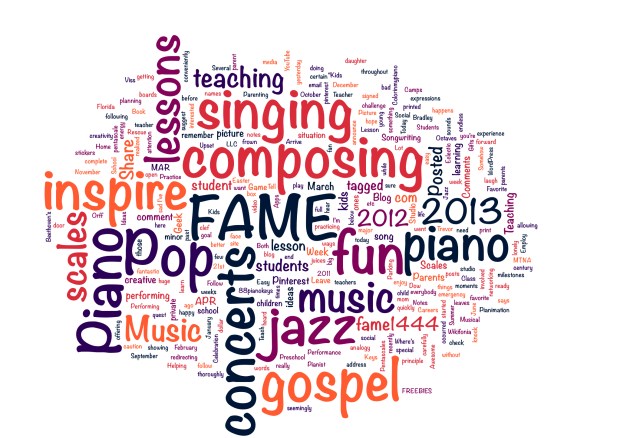
FAME Word Art

Today I discovered the coolest app in a post from the blog An Ethical Island. The app is called CloudArt and is available for iPad in the iTunes store. The app is quite versatile in that you can type in text and it will give you a design. You can also type in a website address and it will generate a design from the website itself! You can even choose your own colors and fonts. The pic above is the what I got when I typed in my website and  added more words that describe my studio. It would be great to frame and hang up in the studio so that parents and kids get a quick visual of what’s in store for them when they take lessons. The art generated from the app would also be great for marketing materials. Another possibility is musical terms review. Students could type in words and generate a graphic. I think visual learners might really benefit from something like that. At  just $0.99 this little app can have a big impact!

What do you think? If you buy the app and create a graphic I’d love to see it in a comment below!

I can see so many possibilities for using this app for the piano studio.

My Favorite Piano Teaching Ideas From Pinterest

Welcome to the Piano Geek Week edition of The FAME School Blog! If you haven’t heard about or signed up for Andrea and Trevor Dow’s Piano Geek Week, be sure to check it out! But, first look below for some fantastic piano teaching finds from Pinterest.

Did you know that The FAME School is on Pinterest? It only takes a few seconds on pinterest to get your creative juices flowing. Here are some of my favorite piano teaching ideas from the visual social networking site. Click the picture links to view the pins.

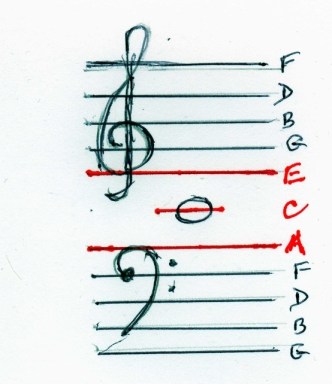
Music Notation Made Easy

wikipedia notation

Noodle Notes for Composing

noodle notes

Teach Piano From The Parking Lot

driveway piano

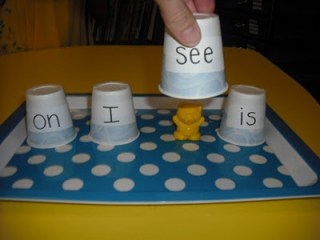
Where’s The Bear – Convert to Note Recognition Game

where's the bear

There are many more very cool teaching ideas on my pinterest site. Everything is conveniently organized and categorized so that you can quickly find something that interests you. There are boards for piano teaching,  preschool music, songwriting for kids, music class and more!

A word of caution: Pinterest can be VERY addicting!!!

Now, for more inspiration visit the Piano Geek Week Site!

Quick Way To Learn A New Song

Quick Way To Learn A Song

What You Will Need:

2 or more piano students (upper elementary and older)

A song that these students like to listen to a lot

1 Die (small is fine, but GIANT is more exciting)

2 Pianos

What You Do:

Teach each student individually how to play the song by rote. (Most likely you will just teach the chorus or a popular riff in the song). You can even have the 1st student help you show the 2nd student how the song goes

Have each student go to a piano

Have each student pick a number from 1-6 and whisper it in your ear

Roll the die until one of the numbers comes up. That is the student who will play first.

The first student plays. As soon as he makes a mistake he must immediately stop playing. Now it is the other student’s turn.

They continue to take turns until someone plays it through with no mistakes. That person receives a point. If they both play it correctly, they both get a point.

 The first person to get 3 points is the winner

Why This Works for the Students:

This formula works because of 2 key ingredients: A song the students like and the friendly competition. Being the first to correctly play a song that you and your friends love significantly raises a  student’s level of cool!

Why This Works for the Teacher:

Students will be practicing without even realizing it!

Valentine Steps

valentine

Here is a quick activity to get the lesson started – especially on Valentine’s Day. Students can practice recognizing and playing stepping patterns on random notes. You could also have the student try to find the matching pattern. (There is one matching set). For extra fun see if the student notices that the hearts form a star in the middle! You can download a copy of this activity here.

Happy Valentine’s Day!

Pinterest Inspired – Music Heals Broken Hearts!

Broken Hearts

Pinterest has got to be one of the greatest resources for inspiration that I’ve ever come across! While browsing the site recently I came across an activity from a school party that used broken hearts to review numbers that was pinned by Ann Berman. Someone suggested making a music matching game with this idea, so I did! I used it as a review for note and rest values. My 3 year old student LOVED it. The game was very easy to make. I used foam hearts and a sharpie to draw a quarter note, half note, whole note, and their corresponding rests on one half of each heart. On the other I wrote the number value. Then I cut the hearts down the middle in different shapes to make unique puzzles in order to make the activity self-correcting.

Do you use Pinterest? If so, leave your link in a comment below. Then hop on over to my Pinterest page and check out some of my boards.


Free “A Major Scale” mp3

If you’ve been following my last few posts, you know that my students are in the middle of a Scales Links Challenge. To help  them remember the notes for the scales I’ve recorded some original scale songs. You can download the A Major Scale song, “A-A-A I Like To Play” for free here!

A Fun Way To Introduce Music Notation

Have you heard of the Freddie The Frog series?  In this picture book series,music educator and author Sharon Burch uses the adventures of a frog named Freddie to introduce music notation and rhythm to early elementary kids. The series is perfectly suited for classroom use, but I use it with private piano students and have found it to be quite useful and enjoyable for students. I was pleasantly surprised to meet Sharon Burch during the 2013 Jazz Education Network (JEN) Conference.   If you are looking for a fun way to introduce music notation to k-3 students, this is it! There are also supplemental games and coloring sheets at http://www.freddiethefrog.comAuthor of Freddie The Frog Series (center) with Dana Rice and Allison Upshaw

Author of Freddie The Frog Series (center) with Dana Rice and Allison Upshaw

2013 Jazz Education Network Conference Notes

164668_10151175357307124_1387194990_n

There was a whole lot of toe-tapping, bippity bopping, swinging and swaying, musical stretching, and growing  last week at the 4th Annual JEN Conference of the Jazz Education Network! I had the privilege of attending and couldn’t wait to share some of the nuggets I picked up from the conference with the Kids and Keys readers.

In case you are unfamiliar with the Jazz Education Network or JEN,  it is an organization dedicated to
building the jazz arts community by advancing education, promoting performance, and developing new audiences.

During the conference I was able to attend several workshops that were not specifically geared to piano teaching. I found that it was VERY helpful to listen to what presenters who play saxophone, trombone, and strings had to say about music education. There were several statements that I will be applying to piano teaching and using with my students even for non-jazz repertoire. Some of the most helpful are:

1. Students want to sound good – This is not always obvious to us as teachers, but is certainly important for us to remember! Just think how much more committed students are when they know they sound good! Let’s teach them music that they like and sound good playing. Better yet, let’s give them music that their friends and families think they sound good playing!

2. Practice is Preparation For The Unexpected –  Let’s prepare students for performances so that once they are on stage they won’t have to make music happen, they can be free to let music happen!

3. Challenge students to have more than just nice performances!  – Nothing should be nice, it has to be entertaining!

4. Not rushing is a discipline of the mind – In jazz, the power comes from grooving and playing behind the beat, but the discipline of not rushing is something that EVERY musician must have!

5. Students have to be taught how to listen with music ears – They don’t usually come to us with music ears. It is up to us to help them improve their hearing – without surgery!

Thanks to the clinicians whose workshops I attended and from whom I gleaned these insights: David Guidi, Pete McGuiness, Gary Motley, Mark Gridley, and Matt Wilson.

Stay tuned tomorrow for more from the JEN Conference. I will be blogging about the session on teaching jazz to young children. In the meantime, visit Jazz Education Network’s website at www.jazzednet.org to learn more about the organization and how you can get involved!
2012 In Review and Many Thanks!

The WordPress.com stats helper monkeys prepared a 2012 annual report for this blog.

Here’s an excerpt:

4,329 films were submitted to the 2012 Cannes Film Festival. This blog had 16,000 views in 2012. If each view were a film, this blog would power 4 Film Festivals

Click here to see the complete report.

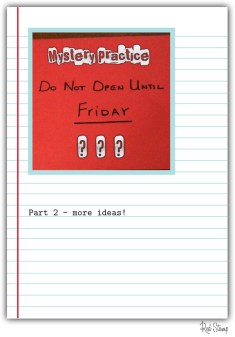
Mystery Practice Assignments Pt 2

Since last week’s post about Mystery Practice Assignments got so much attention on Pinterest and since my students seem to be enjoying the suspense involved in having to wait to find out what their practice assignment for each day is, I’ve decided to do a follow-up. Here are some of the mystery assignments I will be using this week. These are some of the tried and true favorites that I have used over the years in students’ notebooks as well as one idea that came from a comment on a post about How To Get Kids To Sing. Also, this week there will only be 4 mystery assignments – one for every other day. (Hmmm…could this be another way to reinforce the concept of skips?)

1.Place a small ball in the palm of your right hand. Wrap tape around the ball and your hand. Play the Treble clef notes of your practice piece without letting the ball slip out!

2. Using a kazoo, sing the first line of your practice piece whenever your brother or sister says your name tonight. (Thanks to Leila of 88pianokeys for this one!) Teachers/parents – for this one you may have to supply your student with a kazoo. This will actually add to the mystery since you will not tell him/her what the kazoo is for! You will only tell them that it is explained  in one of their envelopes!

3. Put on some dark sunglasses and play your piece with your eyes closed like Stevie Wonder. Were you able to play it without a mistake? If not, keep trying until you can!

4. Watch one of your favorite 30 minute TV shows and play your piece during the commercials. How many times were you able to play your piece?

For a printable copy of the assignments click here. There are enough for up to 4 students each. Simply cut strips and place in a sealed envelope for each day.