What’s The Unique Ingredient In Your Teaching?

Deja and Dana

 In a world where the words “piano teacher” often conjure up negative images in the minds of potential students and potential piano parents, your special skills and interests can help you stand out.  They inform your way of teaching and are the unique ingredient that draws students and parents to your studio!

I unexpectedly became aware of how I apply my special skills to my piano teaching a few days ago while teaching a student how to play the hit song “Say Something” by A Great Big World. This song is definitely a singer/songwriter’s song which lends itself to the piano’s rich ability to communicate deep emotion – especially when combined with heartfelt lyrics. In the process of teaching this song I discovered something unique and potentially marketable about the way I teach. I teach piano lessons from a singer/songwriter’s point of view!

I found myself using the lyrical idea to help my student understand the chord progression in “Say Something”. Where the lyric is hopeful or anticipating, the chord shape is open. Where the lyric is tentative or afraid, the chord shape is closed. When I reflect a little more, I see that I often use examples like this to help my students focus on delivering the message in the song. I believe that this is natural for me because I am a songwriter. Songwriters carefully craft their lyrics and chords to match each other so that they have a specific effect on the listenerFor me, this is the unique ingredient in my teaching. Students who study with me can expect to develop exceptional performance skills in addition to the basic piano skills that most piano teachers teach.

So, my challenge for you is to observe your teaching style during your lessons TODAY and take note of how you explain things.

  • What analogies do you use?
  • What examples do you offer your students for correcting technical issues?
  • What suggestions do you give them for memorizing phrases and music concepts?
  • Who are you as a musician?
  • What is your favorite part of making music?

The answers to these questions can help you pinpoint the unique ingredient in your teaching that makes YOU stand out in the world of piano teaching!


You Might Also Be Interested In:

Teaching Tweens and Teens

Supply and Demand 101: Music Teacher’s Edition

Teaching, Performing, Or Both?

Updated Free Printable For 3 and 4 Chord Songs

Blank Keyboards

After using the worksheet for teaching 3 and 4 chord songs last week with my students I realized that coloring the black keys was a challenge. So, here is an updated version of the worksheet with the black keys blank. Enjoy!

10 Ways To Use A Deck of Cards In Piano Lessons

Cards

If you have a deck of cards, you can put them to good use in your piano studio!

  1. Quick Finger Number Review:                                        Preselect cards numbered 2-5. Have your student pick a card and wiggle the finger that matches the number on the card.
  2. Tricky Practice: Preselect cards numbered 4-9. Have your student pick a card and play a tricky passage the number of times specified on the card.
  3. Note Value Check Up: Preselect cards numbered 2-4. Have your student pick a card and draw or name the kind of note that gets that many counts.
  4. Rest Up: Preselect cards numbered 2-4. Have your student pick a card and draw or name the kind of rest that gets that many counts.
  5. Name That Interval: Preselect all the numbered cards. The student draws a card and quickly plays the interval indicated. If the student draws a 9 or 10 they get to be the teacher and have the teacher play the interval.
  6. Connect The Musical Dots: Have student pick a card and relate it to at least 3 music / piano concepts
  7. Interval Eye Exam: Lay out flashcards that show intervals on the staff. Have students match the cards from the deck to the correct interval. This is a great activity for students who are waiting. To make it more interesting use a timer to see how fast they can complete it. They can then try to beat their fastest time.
  8. Scale Degree Review: Preselect cards numbered 2-8. Choose a particular key to work in. Have student pick a card and play the note that corresponds to the scale degree shown on the card. 
  9. Big Scale Degree Review: Preselect cards numbered 8-10. Choose a particular key to work in. Have student pick a card and play the note that corresponds to the scale degree shown on the card. Gives the opportunity to teach that 8=1, 9=2, 10=3
  10. Key Signature Review: Preselect cards numbered 2-7. Have student pick a card and tell you what key has that many sharps/flats

End The Practice Wars by Applying These 2 Laws

“It’s not what you do, but the way you do it that matters!”

Music theory. Keyboard topography. Rhythm. Ear training. Technique. All these are essentials of learning to play the piano, however, success in teaching these skills is determined by the WAY these skills are taught.

One of the biggest complaints of piano teachers and parents of piano students is that the child will not or does not want to practice. If you can relate to this, then allow me to give you a life changing piece of information:

Law of Love

Parents are busy. Sometimes they feel that they are too busy to sit and listen to their child practice piano. These same parents listen to music all the time while they are working and doing important things. So, what is the problem with listening to their child play music? It just might be that the music their child is playing is unappealing or uninteresting to the parent. Eliminate this problem by getting to know the musical tastes of the parents in your studio. A simple question in passing can get you this information. “Who’s your favorite artist / style of music / song?

Similarly, when dealing with older students (tweens and teens) there is another law you must know as a piano teacher who wants their student to practice:

Law of Friends

To sum it all up, music lessons should equip students to play music that they, their friends, and family enjoy hearing. The successful piano teacher knows this and abides by the law at all times!

Here are some additional FREE resources to help get you started on the road to ending the practice wars in your studio:

Teen Toolkit by Tim Topham: A FREE downloadable toolkit for teaching teens. A must read!

http://colorinmypiano.com/2013/04/09/free-printable-12-bar-blues-in-c/: Introduce the blues – no note reading, just cool sounds

8notes.com: Free riff lessons of popular music

http://www.teachpianotoday.com/2012/03/01/piano-recitals-are-like-totally-like-lame/ : Keep kids practicing with cool performance opportunities

Jazz for Kids : Use 5 finger scales to teach jazz to preschoolers

Another Valentine’s Day Themed Music Activity!

Conductor's BouquetThis Valentine’s Day Themed Conductors Bouquet is going to be used in 3 ways in my studio next week:

– To teach kids which hand plays treble clef notes and which plays bass clef notes

– To teach kids how to feel different time signatures by conducting with the wands

– As a decoration to brighten up the studio so I can see kids’ faces light up as they enter for their lessons

When students arrive for lessons, I will be playing Bob Marley’s “One Love” and Annie Lennox and Al Green’s “Put A Little Love In Your Heart”. The Student will take a wand from the bouquet and using the correct hand for the symbol on the heart join me in conducting the song. We will extend the activity by conducting some of the pieces that they are working on as well. At the end of their lesson they will get to take the wand home to keep!

Here’s what you need in order to do this activity:

1. Valentine’s Wands from Dollar Tree (They come in packs of 3)

2. A sharpie marker to draw bass clef and treble clef symbols on the hearts

3. A nice vase to keep them in

4. Songs of different time signatures

That’s it!

Before we go I have a question: What other Valentine Themed songs can you suggest with different time signatures that can be used in this lesson? Please let me know in a comment below!

Presenting Songs As “Gifts”

Joy Gift

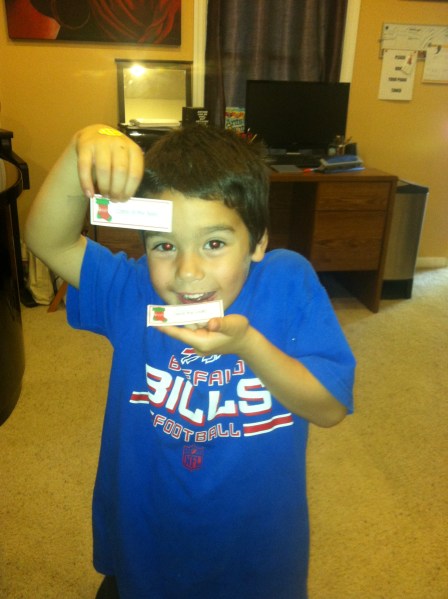
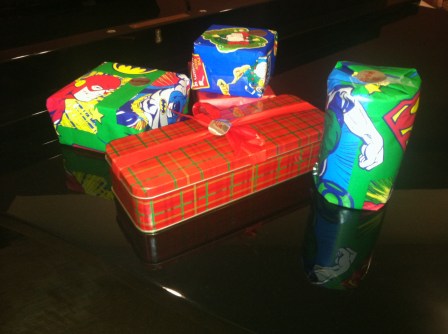
What are most piano teachers thinking about in October? Christmas! Yes, we have to think about Christmas now so that our students have a chance at sounding great when they play Christmas Carols for friends and family during the holidays. Of course it is never to early to help children understand that nothing just happens and that getting good at something takes time. That is why this week in my studio, students are receiving their “Christmas Presents” from me. These are not your ordinary Christmas Presents! They are literally the gift of music. Each child has a wrapped present with their name on it and inside is a label (available on Susan Paradis’ website) with the title of their Christmas piece. At first  the children are a little bit confused because they are used to getting toys and other items when they unwrap gifts – never just song titles! That’s when I begin to explain to them that this is their very own solo that no one else in the studio will be allowed to play!

Happy song gift

The next thing is that they get to keep the box with their song title and put it on their piano at home. I tell them that they should practice this song every day at home and then check inside their box afterwards to see if mom or dad has left anything special inside for them. Of course I give the parents a warning beforehand. Parents can choose whatever incentive they want to give their child. It can even be something as simple as an “I’m so proud of your playing” note.

One more thing makes this activity so fun – they get to see the unopened presents of other students and begin to wonder out loud what’s inside and why their box is bigger or smaller than the others! Sometimes they even want to know what they can do to get a bigger box next time!

Song Gifts


SightReadPlus App Review and Giveaway!

SightReadPlus

Sight-Reading can be a very intimidating thing for piano students. We take a great deal of time teaching students how to practice to perfect pieces, and although they may not enjoy doing so, at least they get to do it without having an audience present. On the other hand a significant part of being a musician involves playing from scores that you have never seen. Hence, the need to practice sight-reading. The difference with practicing sight-reading is that you cannot stop and correct mistakes. You cannot play the same exercise multiple times because then you are not sight-reading!  When using printed sheet music exercises for sight-reading practice students tend to practice in the same way that they practice their lesson pieces.  All of this can be very frustrating for both student and teacher. That’s why in my opinion the iPad app SightReadPlus is such a great tool. Read on to find out why I think so!

Appearance: There is no clutter here! SightReadPlus has a very simple appearance which is free of distractions. If you have students with ADDHD, autism, dyslexia, or students who are very easily distracted (as I do) then this app is definitely one to try in your studio! I also like the appearance for older students (teens and adults) because it does not have a cartoonish feel. Lastly, I’d like to point out the calming blue background.  I’m not sure if the developers chose blue intentionally, but I love it because it counteracts the tension that the idea of sight-reading can evoke.

Cool Features For Students:  When students ace an exercise they get a fireworks show!  Another great thing is that the app is designed in such a way that the student can do it independently. Hand position guides prevent the necessity of the student having to ask the teacher “where do my hands go?”  There is even a finger number guide to help the student as well. As if that were not enough, the student can also touch the Rhythm button to practice clapping the rhythm before attempting to play the exercise. That’s right, no embarrassing moments here!

Cool Features For Teachers: First and foremost is the fact that this app is used with your acoustic or digital piano!!! It listens to the student play his or her instrument and gives immediate feedback. The ability to track an unlimited number of students by name is brilliant! Many other apps only allow tracking a very small number of students which can be quite frustrating especially when new students enter your studio. Another thing I find useful about SightReadPlus is its somewhat secret feature that allows the student to practice 5-finger patterns. This feature is tucked away inside the equally awesome Key Choice feature that allows you to choose the key of the sight-reading exercises. Finally, as a teacher I LOVE that there are 40 exercises in each level and when a student struggles with an exercise they are automatically required to do further practice before moving on. This shows the student that it takes a LOT of practice to develop sight-reading skill. According to one of my 11-year-old students, “It makes you want to get it right because you don’t want to redo the exercise!”

My Wish For Future Updates: One thing that would make this app even more amazing would be the addition of exercises that drill Grand Staff sight-reading.

Cost: $7.99  While the cost is more than a lot of other apps, there are no in-app purchases. That’s right, once you purchase the app you get to use ALL of the features!

I would like to give a special Thank You to Melissa Harris,  President of Cape Cod Music Apps, Inc.  for giving me the opportunity to test this app with my students.  Melissa has also graciously offered one lucky reader a FREE copy of SightReadPlus for use in their studio as well!!!


The Most Irritating Question

You know what it is. Every child asks it when you present them with a multi-day or multi-week challenge or anything that requires consistent effort no matter how minimal. I have encountered this question many times during my teaching, and it irritates me every time. So…what is the most irritating question?

“What do I get if I do it?”

The real answer to the question is that the child gets a sense of accomplishment and gains new skills. They get to say, “I Did It!” Sadly, though, for today’s kids this has no value. Sadly again is that if you do come up with a prize, unless they see it as truly valuable they will refuse to do the assignment because to them it is not worth the effort. 

New FREE Printable: A Piano Project Kids Love


Piano Bears CoverIn yesterday’s post I shared some pictures and video from our Piano Bears Spring Project where the students made bears at Build A Bear Workshop that have a recording of them playing the piano. The picture above is one of the bears a student made.

My students and I enjoyed working on this project because it gave the students a chance to do something fun and memorable with their music. Every time they squeeze their bear they get to hear how their hard work all year has paid off!

If you are interested in doing this project in your studio, download my eBook, A Piano Project Kids Love: Piano Bears, for FREE by clicking here!

I’d love to hear about what kinds of special projects you do with your students as well!